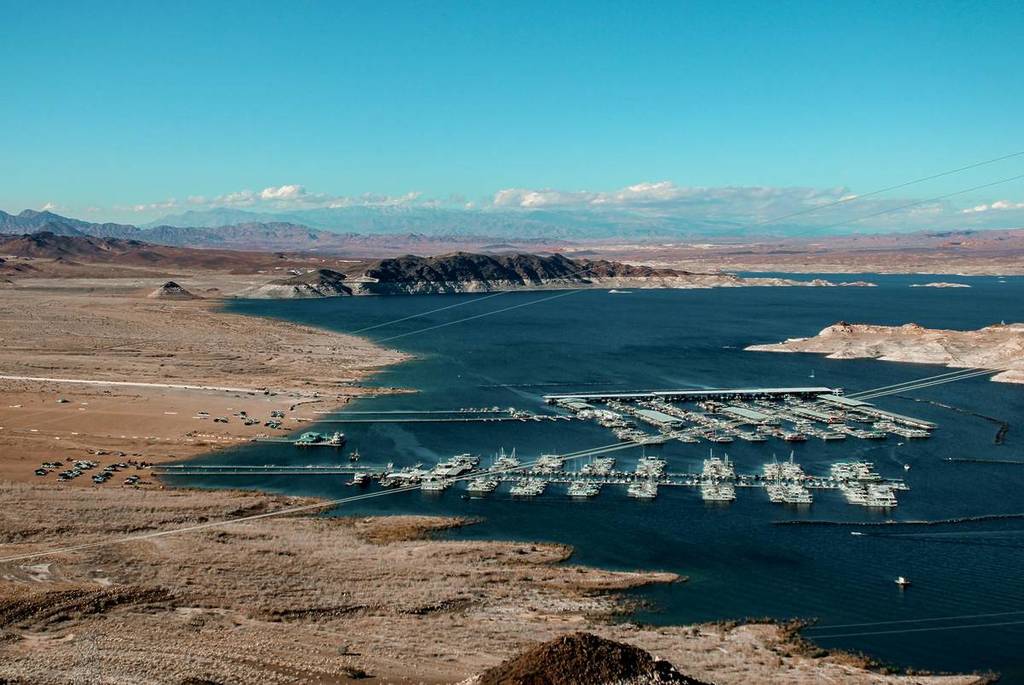

These aren’t the news we love to write or want you to read, but it’s important to know what’s happening around us, and what Mother Nature is up to. Southern Nevada’s main water source is facing a historically scary future. According to new projections released by the U.S. Bureau of Reclamation, Lake Mead’s water levels could plummet to 1,020 feet by July 2027. This drop would put the reservoir at 20 feet below its previous record low, which was set just in 2022.
What does it mean if Lake Mead’s water levels continue to decline?
For Vegas locals and our neighbors, this forecast is a pretty critical warning. The rapid decline is being driven by a poor snow season. But that’s not just it; we’re also looking at a federal decision to reduce water releases from Lake Powell upstream. As a result, the Colorado River system that supplies water to over 25 million people is under high pressure.
If water levels fall below 1,035 feet (which is now expected as early as next April), Hoover Dam’s generating capacity will be severely impacted. Output could potentially be slashed in half.
What does this mean for our community? As reservoir levels drop, mandatory water cuts could become a reality. Nevada currently faces a 50,000 acre-foot cut to its usual 300,000 acre-foot allocation.
What’s the solution?
Federal funds have been allocated to replace older turbines with models that can operate at lower water elevations. Moreover, utility providers across Nevada (and neighboring states) are looking to fill potential gaps in their energy portfolios.
Local water authorities urge us all to strictly follow seasonal watering restrictions, report water waste, and transition to desert-friendly landscaping. As the region navigates these historic lows, embracing water conservation is the new reality – and we all need to adapt.