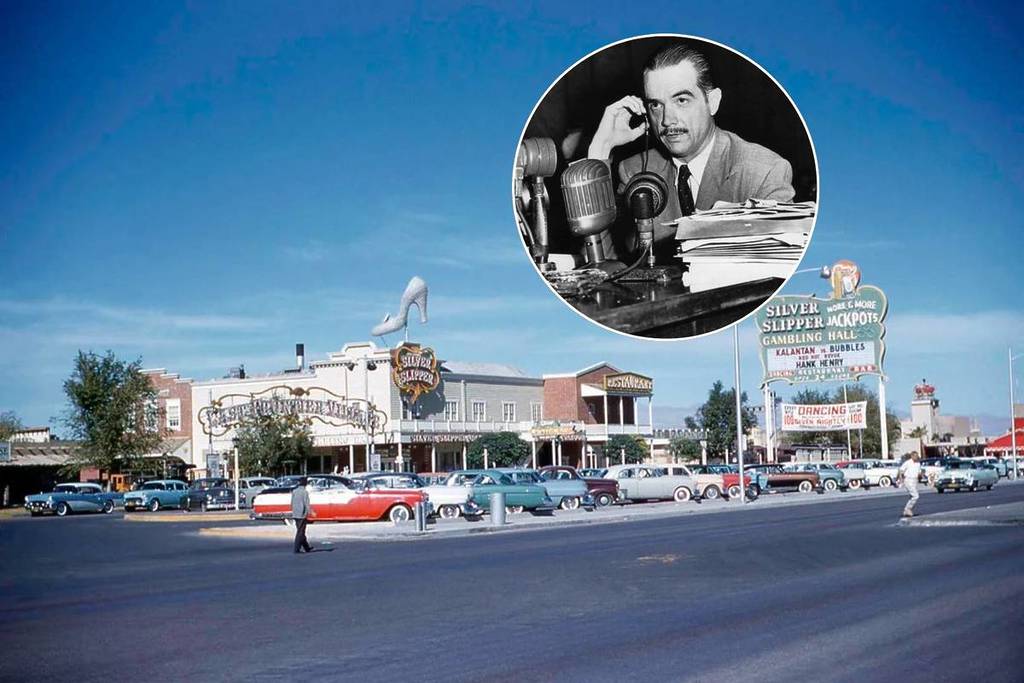

Ever wondered how far do money and power go? We may never know the real answer, if there’s any – but it definitely goes far enough to buy a whole casino because a bright light bothers you. And Vegas know this tale all too well.
Howard Hughes and his legendary spending spree
Howard Hughes was an American titan: a record-setting aviator, a Hollywood filmmaker, and one of the wealthiest men in the world at the time. But by the late ’60s, the billionaire had transformed into a famously eccentric recluse. Seeking absolute privacy, Hughes arrived in Las Vegas in 1966. He moved into the top-floor penthouse of the Desert Inn, and he would not leave that suite for 4 years.
When the inn’s management eventually asked him to vacate his room so they could accommodate holiday high rollers, Hughes responded in classic billionaire fashion – he bought the entire hotel. This started a massive spending spree. Hughes purchased a couple of iconic properties, including the Sands, the Frontier, and the Landmark. He actually played a pivotal role in shifting Vegas away from mob control and toward corporate legitimacy.
The story of the Silver Slipper
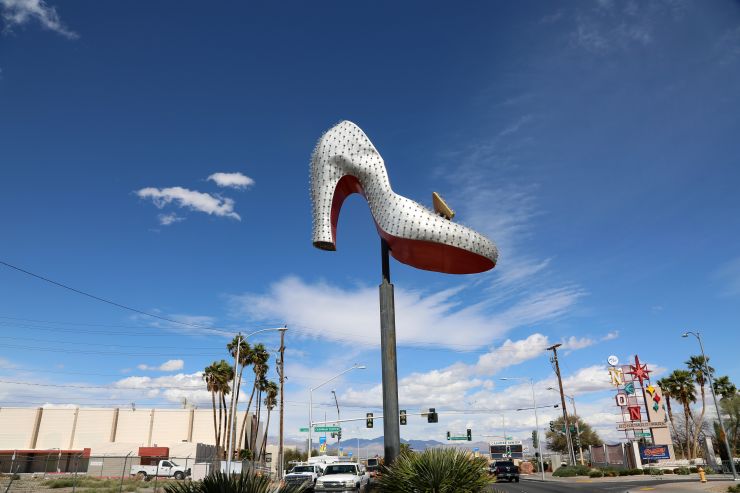
However, his most famously petty purchase was the Silver Slipper casino. Directly across the Strip from Hughes’s Desert Inn penthouse sat the Silver Slipper. The casino was crowned with a massive, rotating neon slipper on its roof. Every time the slipper spun, its lights flashed directly into Hughes’s bedroom window – or so he claimed. Already suffering from severe insomnia, OCD, and paranoia, Hughes was infuriated by this. He even feared the sign housed a hidden camera meant to spy on him.
Hughes demanded that the Silver Slipper’s owners turn the sign off, but they refused. For Hughes, the solution was straightforward. In 1968, he simply purchased the Silver Slipper Casino for $5.4 million. His very first order of business as the new owner? He had the rotating slipper dismantled, the sign locked into a fixed position facing away from his window, and the lights permanently switched off. Rumors say, he even filled it with cement. However, the sign is currently at the Neon Museum, who claims that this part isn’t accurate.
The other side of the story
There’s 2 sides to every story, right? Turns out, a former manager of the Silver Slipper says that Hughes’s room at the Desert Inn was blacked out – so the light couldn’t possibly bother him. Additionally, there was another brighter and bigger casino, closer by: the Frontier Hotel and Casino. According to this theory, the Silver Slipper was just another chapter of his legendary spending spree in Vegas.
Either way, it remains one of the most legendary power moves in Las Vegas history: dropping millions of dollars just to draw the ultimate blackout curtain.